From Waste to Resource: The Future of Recycling and Waste Management
Denizli, Türkiye • October 2026
Location
Denizli, Türkiye
Date
October 2026
During this fruitful 5-day event, our main focus was empowering students with practical zero-waste skills and proving that discarded materials are reusable assets rather than waste.
Key Highlights of Türkiye Mobility
School-Wide Zero-Waste Best Practices in Action
International partners explored the living sustainability model of 100. Yıl Mehmetçik Secondary School. Highlights included our 5,000-liter rainwater harvesting system, on-site organic composting unit, heirloom seed library, vertical PET bottle gardens, and the stationery sharing wall—demonstrating how middle schools can turn ecological habits into daily routines.
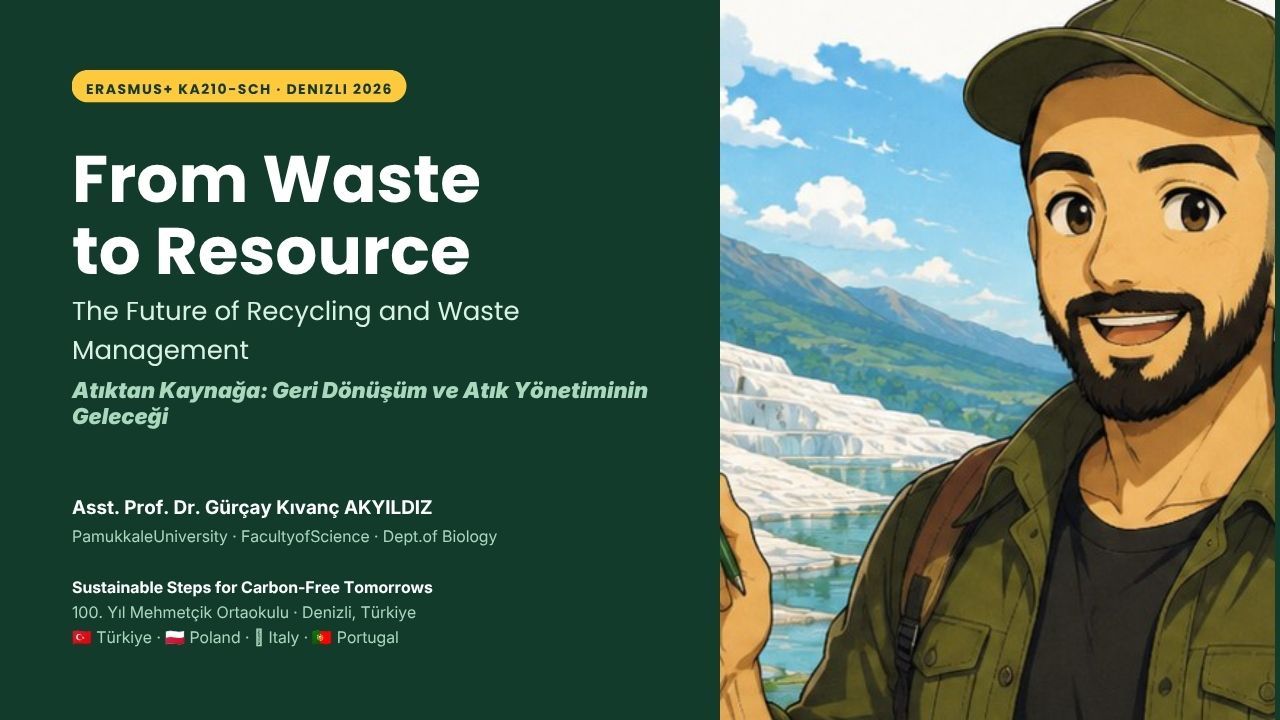
Expert Academic Training by Asst. Prof. Dr. Gürçay Kıvanç Akyıldız
Participants attended an in-depth keynote seminar on "Waste Management, Recycling Dynamics, and Sustainable Consumption Habits". The session bridged scientific theory with youth action, analyzing the transition from linear to circular economies, microplastic pollution in food chains, and the 5 R’s of eco-conscious citizenship.
Hands-On Artisan Upcycling & Traditional Arts
Theory met creativity through interactive workshops: Eco-Friendly Tote Bag Printing: Designing reusable canvas bags with non-toxic textile inks to eliminate single-use plastic shopping bags. Seed Ball Crafting: Rolling compost-and-clay seed balls with local seeds to restore natural habitats. Traditional Water Marbling : Integrating organic earth pigments and nature motifs into centuries-old Turkish paper art.
Industrial Ecology at Denizli Solid Waste Disposal Facility
Students and teachers conducted a technical site visit to Denizli Metropolitan Municipality’s municipal treatment plant. Participants observed mechanical sorting lines, leachate purification, and the transformation of landfill biogas into green electrical energy, highlighting the technological complexity of waste recovery.
Linking Ancient Resource Heritage to Modern Conservation
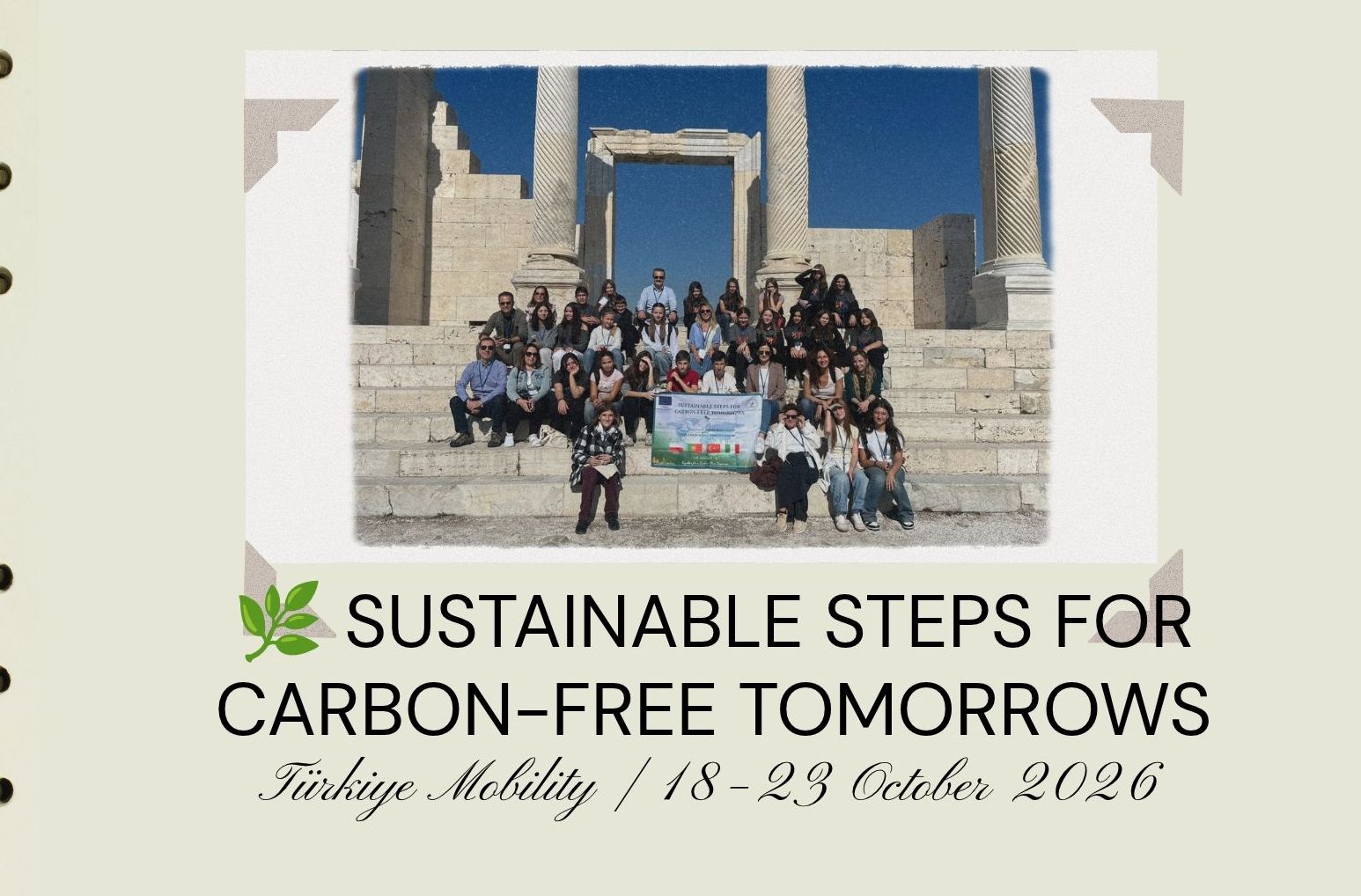
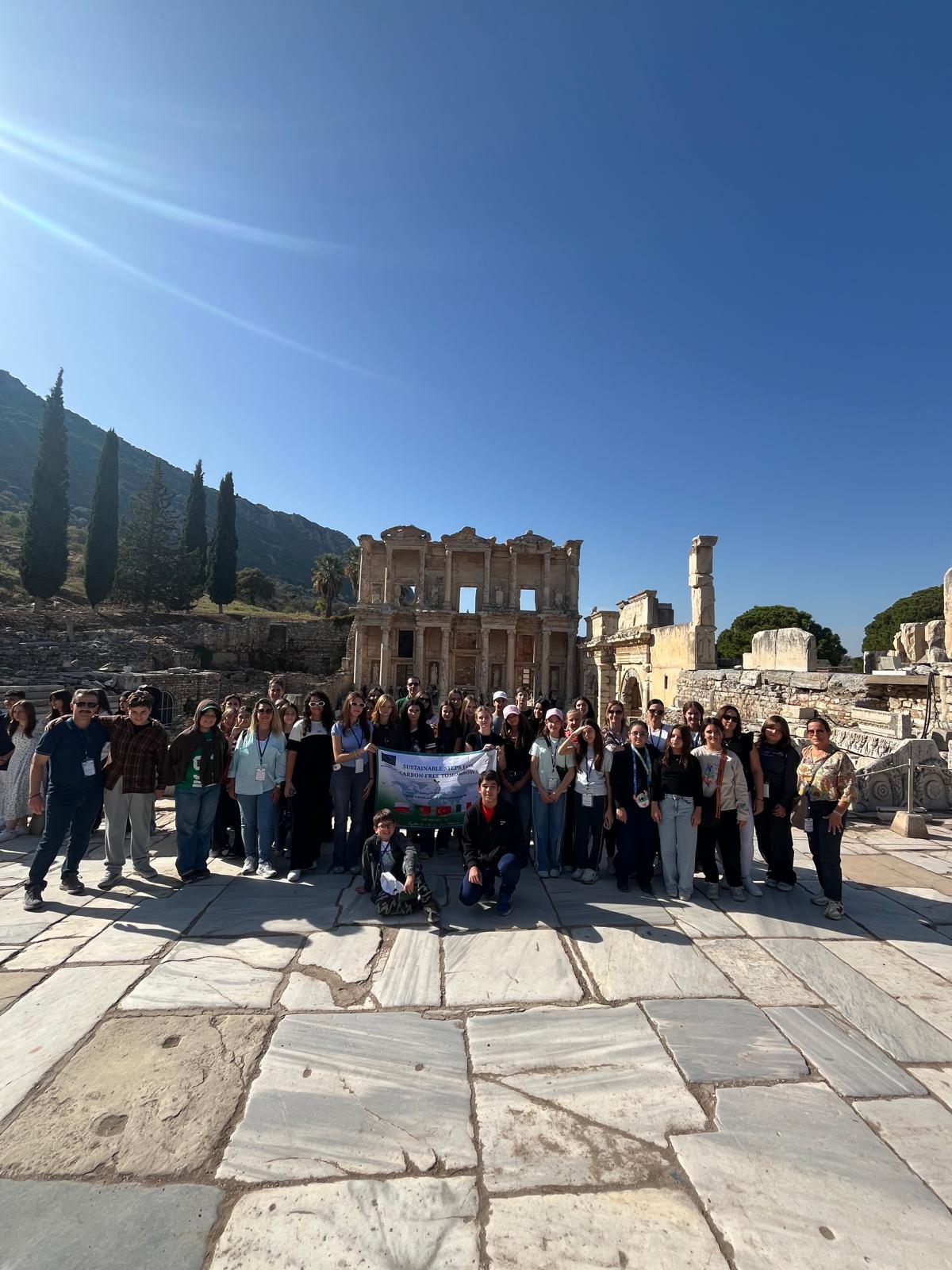
Delegations conducted educational field studies at the UNESCO World Heritage site of Pamukkale & Hierapolis, Laodikeia, and Ephesus. Examining ancient Roman aqueducts, stone water networks, and geothermal pools offered a unique historical perspective on water preservation and geological stewardship.
The Upcycled "Green Rhythm" Orchestra & Live Concert
Under the artistic direction of music teacher S. Çavdar, international student teams crafted functional musical instruments entirely from waste plastics, cardboard, and tin cans. The week culminated in an inspiring live "Recycled Rhythm Concert", proving that art and sustainability can harmonize to inspire environmental action.
Digital Co-Creation & Multilingual Evaluation
Students actively documented their learning through Web 2.0 tools: Curating a live collaborative Padlet Daily Eco-Diary. Competing in a waste management Kahoot Challenge Reflecting on week-long learning outcomes during an evaluation session